← ProjectsProgetti · Hydraulics — Bachelor thesisIdraulica — Tesi di laurea
Teaching a city
to absorb rain.Insegnare a una città
ad assorbire la pioggia.
Effects of Low Impact Development (LID) and Green Infrastructure (GI) on the quantity and quality of stormwater. Bachelor thesis in Sustainable Building Engineering, Sapienza Università di Roma, October 2025. Effetti del Low Impact Development (LID) e delle infrastrutture verdi (GI) sulla quantità e qualità delle acque meteoriche. Tesi di laurea in Sustainable Building Engineering, Sapienza Università di Roma, ottobre 2025.
The questionLa domanda
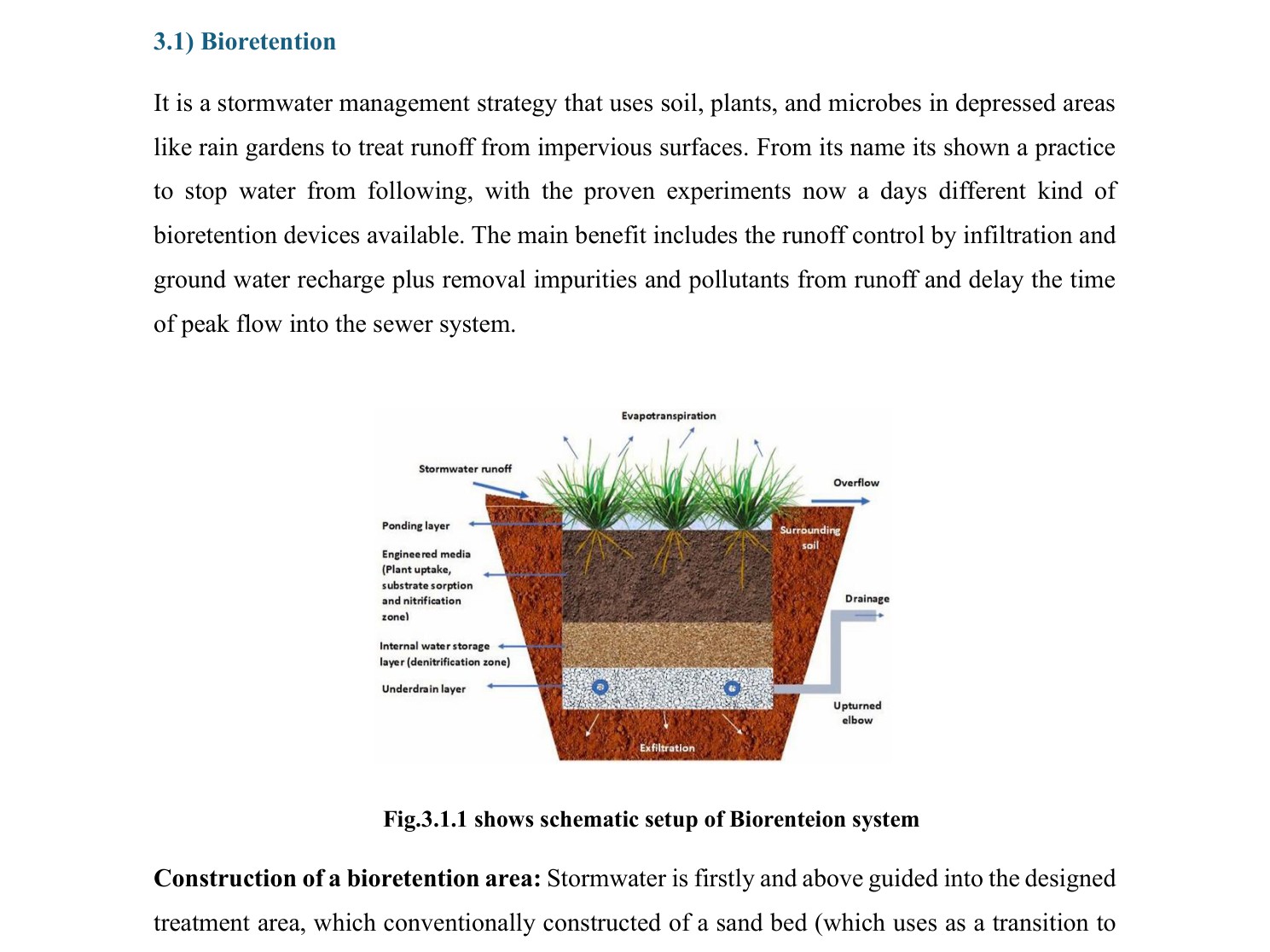
Cities are sealed surfaces: rain that a meadow would drink runs off asphalt in minutes and arrives in the drainage network all at once. The thesis asked two questions: how much of that flood peak LID measures can shave off, and how much cleaner the runoff becomes. The measures studied were permeable pavements, bioretention cells and green roofs. Le città sono superfici impermeabili: la pioggia che un prato assorbirebbe scorre sull'asfalto in pochi minuti e arriva in rete tutta insieme. La tesi ha posto due domande: quanto le misure LID riducono il picco di piena e quanto più pulito diventa il deflusso. Le misure studiate sono pavimentazioni drenanti, celle di bioritenzione e tetti verdi.
The modelIl modello
I built and calibrated a rainfall–runoff model of an urban catchment in HEC-HMS, with the basin geometry and land cover prepared in QGIS. Design storms across multiple return periods were run against a baseline scenario and against LID scenarios, comparing peak discharge, runoff volume and timing. Ho costruito e calibrato un modello afflussi–deflussi di un bacino urbano in HEC-HMS, con geometria del bacino e uso del suolo preparati in QGIS. Le piogge di progetto, per diversi tempi di ritorno, sono state simulate su uno scenario di riferimento e su scenari LID, confrontando portata al colmo, volume di deflusso e tempi.
Beyond EuropeOltre l'Europa
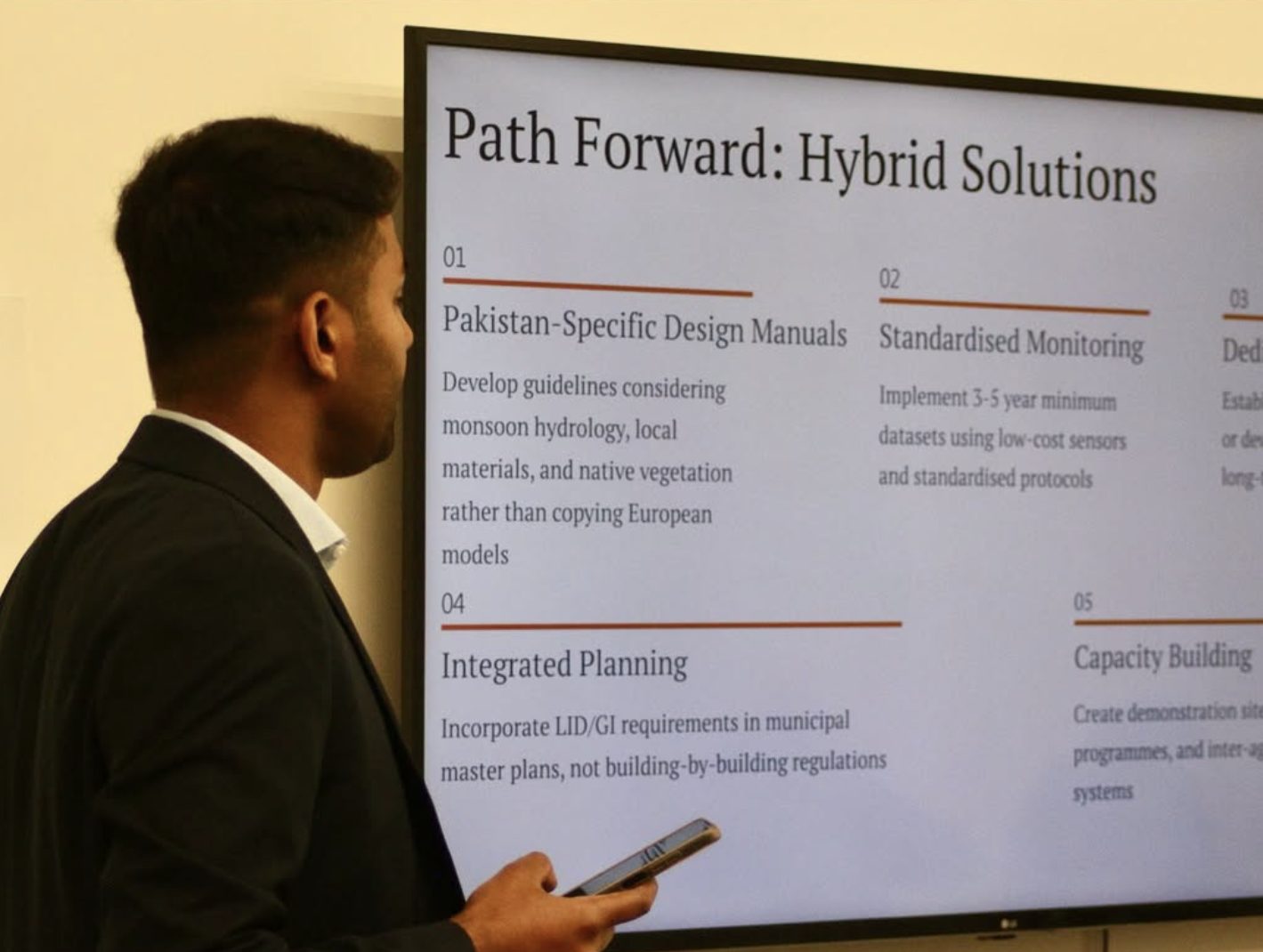
The closing chapter looked at what it would take to apply LID in Pakistan. Its recommendations: design manuals built on monsoon hydrology and native vegetation instead of copied European standards, low-cost standardised monitoring over a 3–5 year horizon, and LID requirements written into municipal master plans. Il capitolo finale ha esaminato cosa servirebbe per applicare il LID in Pakistan. Le raccomandazioni: manuali di progettazione costruiti sull'idrologia monsonica e sulla vegetazione autoctona anziché su standard europei copiati, monitoraggio standardizzato a basso costo su un orizzonte di 3–5 anni e requisiti LID nei piani regolatori comunali.